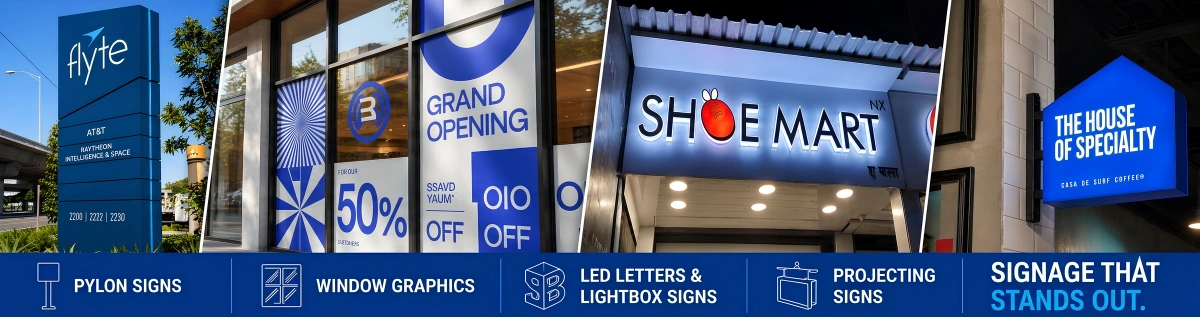
Shopfront signs are the most common business sign type in Australia, covering fascia signs, under-awning signs, window lettering, and projecting blade signs. Approval requirements depend on sign type, size, illumination, and your council zone. This guide covers all shopfront sign types and what approval you need in 2026.
Shopfront Sign Types and Permit Status
| Sign Type | Typical Approval | Size Threshold (exempt) |
|---|---|---|
| Fascia sign (flat on building face) | Often exempt if small | Up to 3m² non-illuminated |
| Under-awning sign (hanging below awning) | Usually exempt | Under 1m x 0.3m |
| Window graphics / vinyl | Usually exempt | Under 25–30% of window area |
| Projecting / blade sign (perpendicular to wall) | DA or CDC required | All sizes — not typically exempt |
| Illuminated fascia sign | DA or CDC required | Not exempt (illumination triggers approval) |
| LED / backlit sign | DA required (most cases) | Not exempt |
| Lightbox sign | DA or CDC required | Not exempt |
Fascia Signs — Most Common Shopfront Sign
A fascia sign sits flat against the front face of the building above or beside the shopfront. Rules:
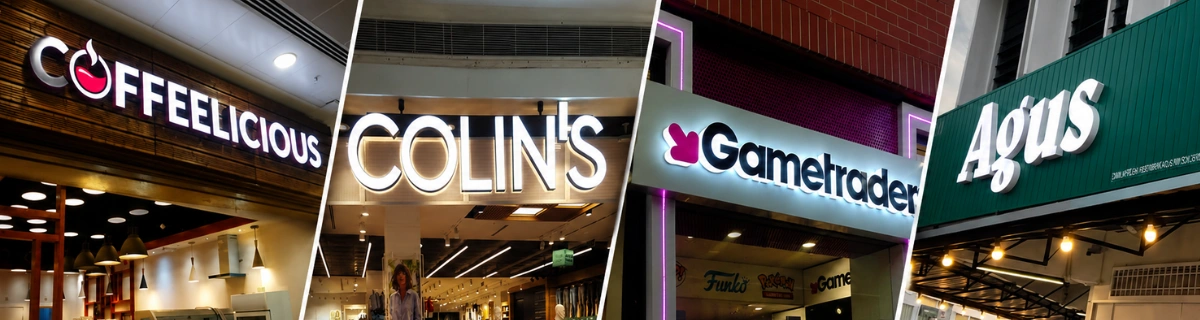
- Non-illuminated, under 3m²: Typically exempt in commercial zones — no approval required
- Illuminated (any size): DA or CDC required in all states
- Over 3m²: DA or CDC required regardless of illumination
- Heritage areas: DA required for all sizes and types
Under-Awning Signs
Under-awning signs hang below an existing awning, visible to pedestrians. They are among the most commonly permitted exempt sign types:
- Typically exempt if under 1m x 0.3m (0.3m²)
- Must maintain minimum 2.6m clearance to ground
- Non-illuminated only for exemption
- Maximum one sign per tenancy per awning face
Projecting / Blade Signs
Projecting signs stick out from the building face perpendicular to the wall — sometimes called blade signs or bracket signs. These almost always require a DA because:
- They protrude over public footpaths, requiring council consent for use of airspace
- Structural attachment to the building requires building assessment
- Not covered by exempt development codes in most states
Shopfront Sign Permit Costs by State
| State | Exempt Fascia Sign | Illuminated Fascia (DA) | Projecting Sign (DA) |
|---|---|---|---|
| NSW | $0 | $400 – $2,000 | $500 – $2,500 |
| VIC | $0 | $1,474 | $1,474 |
| QLD | $0 | $280 – $1,500 | $280 – $1,500 |
| WA | $0 | $200 – $1,000 | $200 – $1,200 |
| SA | $0 | $145 – $600 | $145 – $800 |
Check Your Shopfront Sign Rules
Use the free permit checker to confirm what approval your specific shopfront sign needs. Or check your state and council directly:
- NSW shopfront sign rules
- VIC shopfront sign rules
- QLD shopfront sign rules
- WA shopfront sign rules
- SA shopfront sign rules
Related: Signs that do not need approval | LED sign permit rules | How to apply for a sign permit