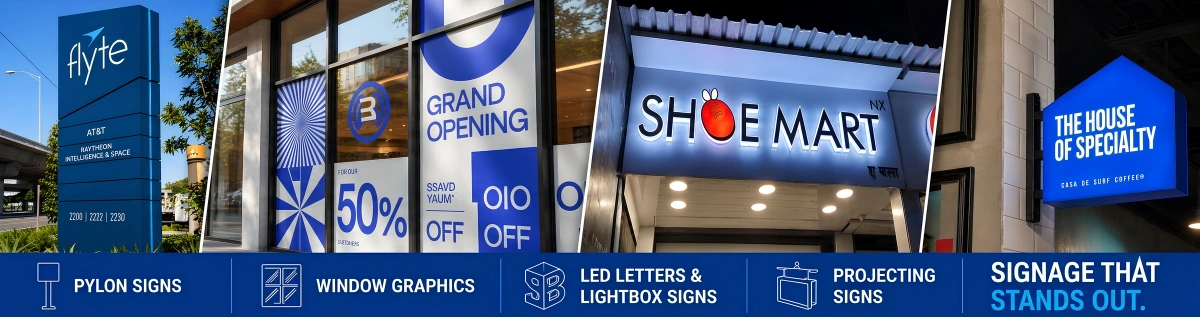
A complete, well-prepared sign permit application is the single best way to avoid delays. Most councils report that incomplete applications are the number one cause of slow approvals. Use this checklist before lodging your sign permit DA or CDC application.

Step 1 — Before You Apply
- ☐ Confirmed your sign is NOT exempt development (use the permit checker)
- ☐ Confirmed whether DA or CDC pathway applies (DA vs CDC guide)
- ☐ Identified the correct council or private certifier to lodge with
- ☐ Checked if your property is in a heritage area or heritage overlay
- ☐ Confirmed your zone (commercial, industrial, residential) and any overlays
- ☐ Obtained landlord or building owner consent if you are a tenant
Documents — All Sign Applications
- ☐ Completed application form — from your council website or private certifier
- ☐ Site plan (1:200 or 1:500) — showing the sign location on the site and building
- ☐ Sign elevation drawings (1:50 or 1:20) — scaled drawings showing all sign faces, dimensions, materials and colours
- ☐ Photomontage — existing photo of the building with the proposed sign digitally rendered in place
- ☐ Owner consent form — signed by building/land owner (required if applicant is a tenant)
- ☐ Application fee payment — bank cheque, credit card, or online depending on council
Documents — Illuminated and LED Signs
- ☐ Electrical specifications — power supply, transformer type, wattage
- ☐ Luminance data sheet — measured brightness in cd/m² from manufacturer
- ☐ Operating hours plan — when the sign will be illuminated (e.g. 7am–11pm)
- ☐ Auto-dimming specification — confirm sign can auto-dim at night if required
- ☐ Glare assessment if sign is within 100m of residential properties or faces a road
Documents — Heritage Areas
- ☐ Heritage Impact Statement (HIS) — from a qualified heritage consultant
- ☐ Material and colour samples — showing heritage-compatible sign materials
- ☐ Historical research — evidence of previous signage on the building (assists approval)
- ☐ Confirm referral requirements — some states require referral to State Heritage body
Documents — Freestanding / Pylon Signs
- ☐ Structural engineering certification — confirming sign structure is safe
- ☐ Foundation details — footing design for pylon sign
- ☐ Sight line / traffic assessment — if sign is near a road or intersection
- ☐ Confirm setback from road boundary meets council requirements
After Lodgement — What to Track
- ☐ Save your lodgement reference number
- ☐ Set a diary reminder for 10 business days to follow up on status
- ☐ Respond to any Request for Information (RFI) within 14 days to avoid clock stopping
- ☐ Check your spam folder for council correspondence
- ☐ Once approved: read all conditions before installation
- ☐ Install exactly as approved — variations require a modification application
- ☐ Obtain electrical compliance certificate after installation (if illuminated)
Quick Reference — Timeframes
| Pathway | Typical Decision Time |
|---|---|
| Exempt development | No wait — install immediately |
| CDC (private certifier) | 10–20 business days |
| Standard DA (non-notified) | 4–8 weeks |
| Notified DA | 8–16 weeks |
| Heritage DA | 12–20 weeks |
Related guides: How to apply step-by-step | DA vs CDC pathway explained | Signs that do not need approval